

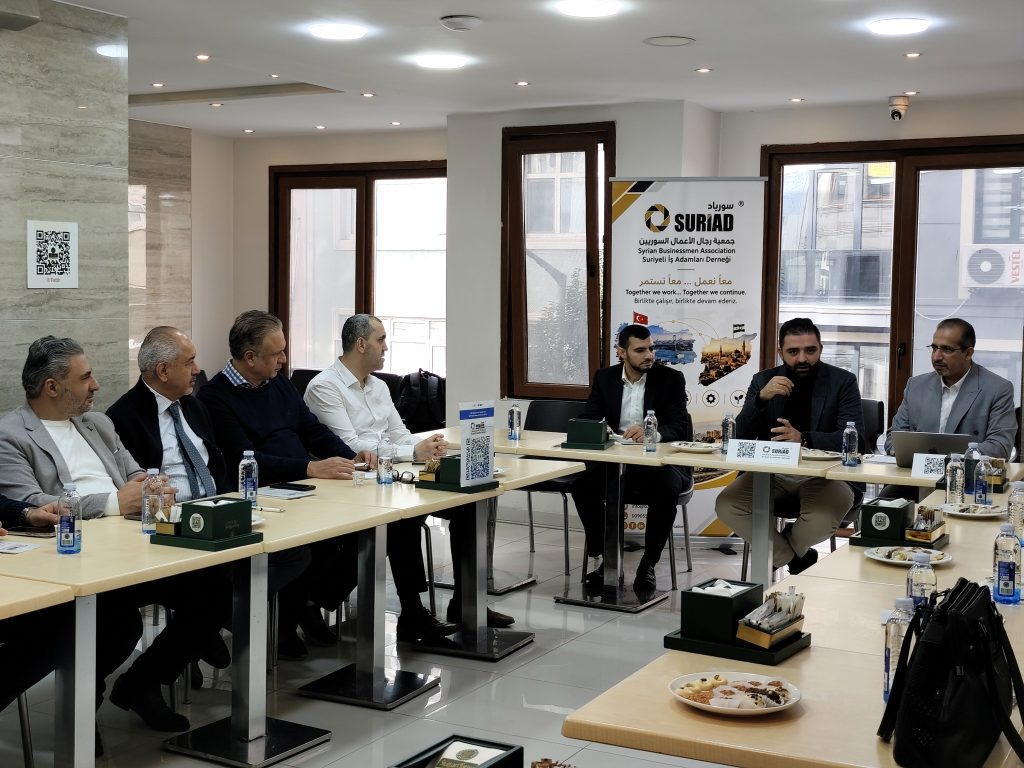
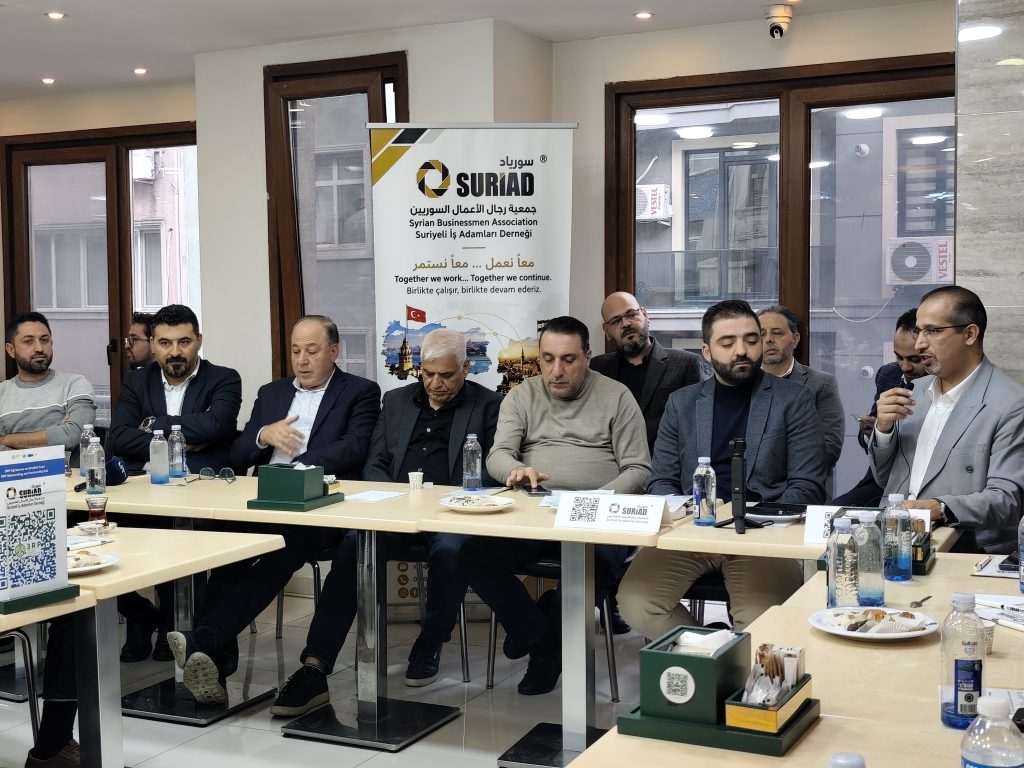
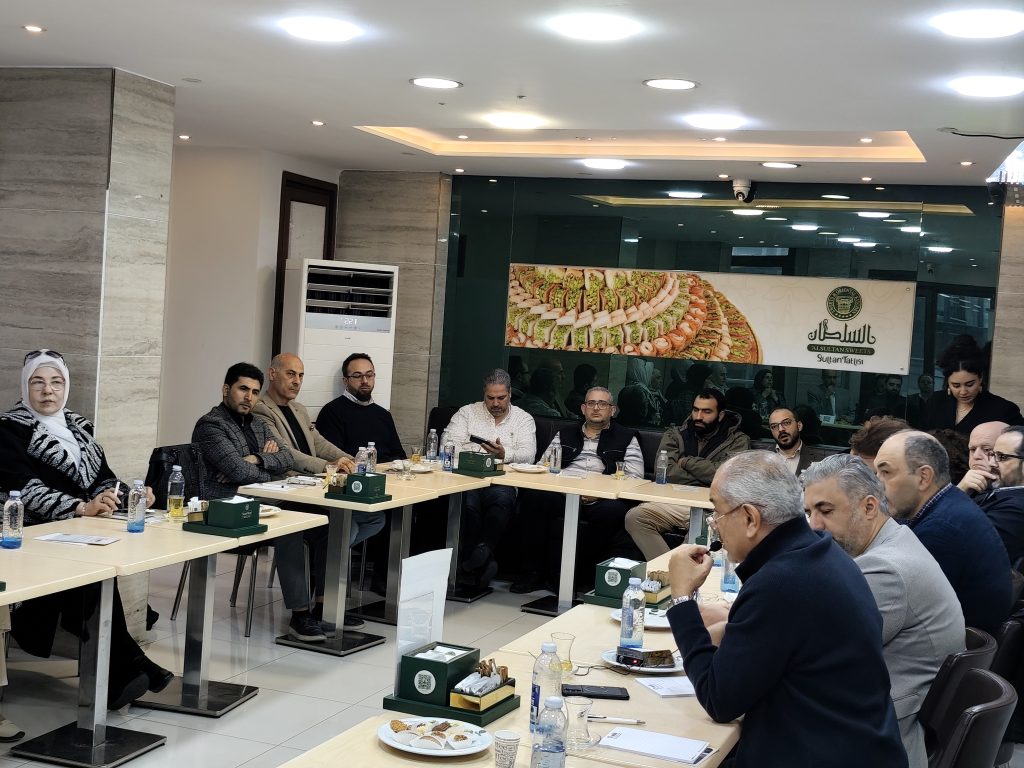
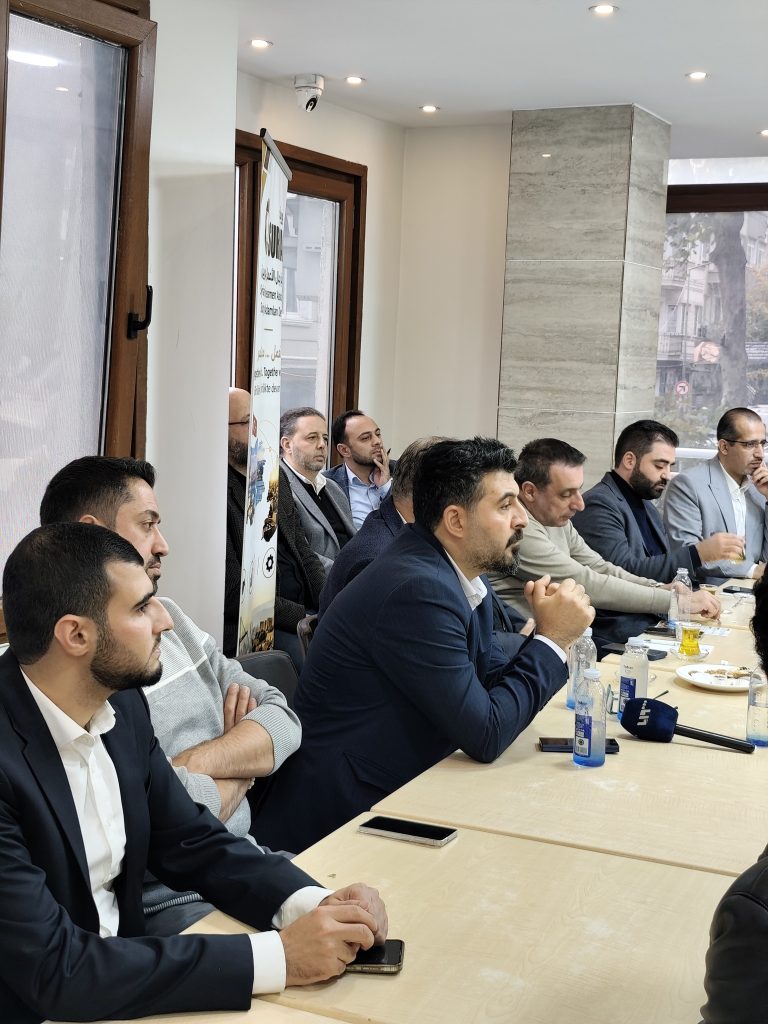
The Syrian Businessmen Association – SURIAD organized its second 2026 session of the “Syrian Business Dialogues” series in Istanbul, under the title “Economic Experience Exchange and Mutual Support Workshop for Syrian Entrepreneurs,” as part of SURIAD’s project supported by the United Nations High Commissioner for Refugees (UNHCR).
The session falls under the project’s economic experience exchange and mutual support component for Syrian entrepreneurs, representing the third activity in the project plan. It aimed to provide business owners with a practical space to directly share their experiences and challenges and benefit from the accumulated expertise of other participants, rather than relying solely on theoretical presentations.
The event brought together a diverse group of company owners, women and men entrepreneurs, and experts from various economic sectors, including technology and digital transformation, healthcare, energy, construction, manufacturing, e-commerce, furniture, food products, automotive, media, education, and professional services.
Representatives of the United Nations High Commissioner for Refugees (UNHCR) also participated in the opening of the session, where the cooperation with SURIAD was highlighted, along with the importance of connecting protection and economic empowerment programmes with the actual needs of business owners and the Syrian community in Türkiye.
From Success Stories to Accumulated Experience
The session began with a networking segment that gave participants the opportunity to introduce their businesses, professional activities, experience, and target markets.
The session was built around the idea that the practical experience of a company or business owner can provide knowledge that is just as valuable as theoretical training, particularly when that experience includes successes, failures, challenges, and the decisions taken to overcome them.
Accordingly, the session was conducted as an open dialogue in which business owners shared their experiences between Türkiye and Syria, discussed how their plans had changed following developments in Syria, and explained whether they had chosen to remain in Türkiye, move to Syria, or operate in both markets simultaneously.
Staying in Türkiye or Moving to Syria?
This question formed the first main theme of the session.
The discussions demonstrated that there is no single model suitable for all business owners. Some participants maintained their companies in Türkiye while establishing an activity or branch in Syria, others transferred a larger part of their operations to the Syrian market, while some adopted a flexible model that allows them to manage their businesses across more than one country.
Participants discussed the factors influencing such decisions, including the nature of the sector, company size, target market, infrastructure, availability of skilled personnel, family stability, as well as the relationships, experience, and assets business owners have built during their years in Türkiye.
The concept of a “hybrid model” emerged during the discussion as an option worth considering for some companies, whereby expansion into Syria does not require abandoning the assets, relationships, and markets already established in Türkiye.
Several participants emphasized the importance of a gradual transition, beginning with market exploration, testing opportunities, and building partnerships before making major investment decisions. They also highlighted the value of learning from the experiences Syrian entrepreneurs gained while establishing their businesses in Türkiye in order to avoid repeating the same mistakes in a new market.
Legal and Procedural Challenges Require Greater Clarity
The session also addressed a range of legal and procedural challenges faced by business owners in both Türkiye and Syria.
The discussions covered experiences related to establishing, amending, and closing companies; registering business names; residence and work permits; travel and mobility between the two countries; and changing administrative procedures that can sometimes make it difficult to access accurate and up-to-date information.
Participants emphasized the importance of having reliable channels for obtaining legal and procedural information, enabling business owners to make decisions based on clear information and reducing the risks associated with poorly informed procedures.
The discussion also highlighted the importance of business associations collecting these challenges, communicating them to the relevant authorities, and transforming individual experiences into practical recommendations and proposals.
Human Capital: A Challenge and an Opportunity at the Same Time
One of the topics that generated extensive discussion was workforce availability and human capital.
Company owners discussed the challenges of finding qualified employees, differences in work culture and professional experience between markets, and the need to retrain and develop some employees in line with the requirements of modern businesses.
At the same time, participants viewed this gap as an opportunity to develop vocational and technical training programmes and transfer the experience acquired by Syrians in Türkiye, the Gulf, and Europe to young people in Syria.
Models for remote work, joint training, digital transformation, artificial intelligence, and connecting Syrian professionals inside and outside Syria through more effective professional networks were also discussed.
Logistics, Infrastructure, and Supply Chains
Participants discussed the logistical challenges facing companies seeking to operate between Türkiye and Syria, particularly shipping, transportation, supply chains, and the availability of raw materials.
Several business owners shared their experiences in e-commerce, shipping, and delivery within Syria, as well as challenges related to infrastructure, electricity, internet connectivity, and other services required by different sectors.
Some participants also presented practical solutions they have implemented in their own businesses, including the use of solar energy, digital management of operations, cooperation with local partners, and maintaining part of their operational infrastructure in Türkiye while simultaneously expanding into Syria.
Emerging Opportunities Across Multiple Sectors
Despite the challenges, participants presented a number of experiences demonstrating emerging economic opportunities in the Syrian market.
The discussions included experiences in healthcare and the rehabilitation of medical facilities, digital transformation, e-commerce, energy and infrastructure, construction and interior design, furniture, food products, automotive services, and other sectors.
Some participants noted that the current limited presence of major international companies in certain sectors could create room for Syrian small and medium-sized enterprises to establish a position in the market, provided they are able to manage existing risks and challenges appropriately.
From Networking to Building Sustainable Channels
The session went beyond exchanging experiences and also examined the role SURIAD could play during the next phase.
Participants emphasized the need to strengthen networking among businesspeople, establish communication channels between Syrian, Turkish, and Arab companies, and transfer experience and knowledge into Syria. They also highlighted the importance of collecting information and data that can help decision-makers and business owners gain a clearer understanding of the economic environment.
The importance of strengthening communication with economic journalists, civil society organizations, and business councils was also discussed as a means of highlighting genuine economic challenges and exploring potential solutions.
Realism, Optimism, and Collective Action
One of the key messages repeatedly emphasized during the session was that investing in or returning to Syria should not become a test of personal positions or an emotionally driven decision.
Opportunities exist, but the challenges are also real. Success requires market research, learning from previous experiences, preserving existing achievements, building the right partnerships, and adapting to changing circumstances.
At the same time, participants stressed that the experience Syrians have accumulated during their years of working in Türkiye and other countries represents an important asset that can contribute to developing the Syrian economy, creating employment opportunities, and transferring managerial and technical knowledge.
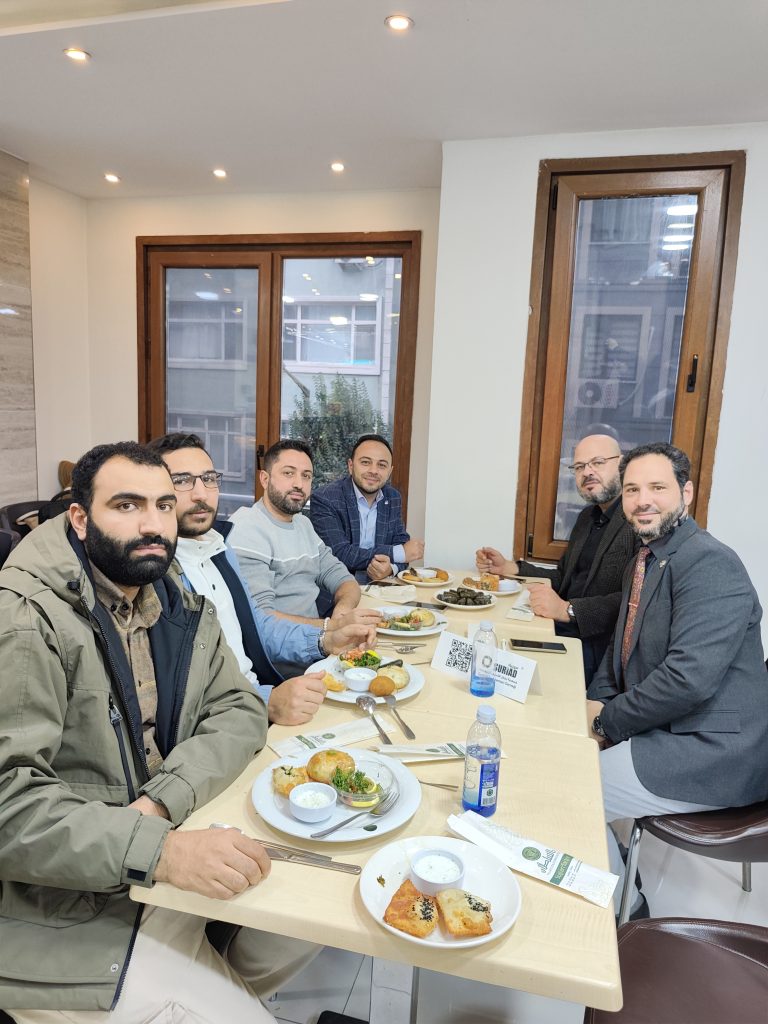
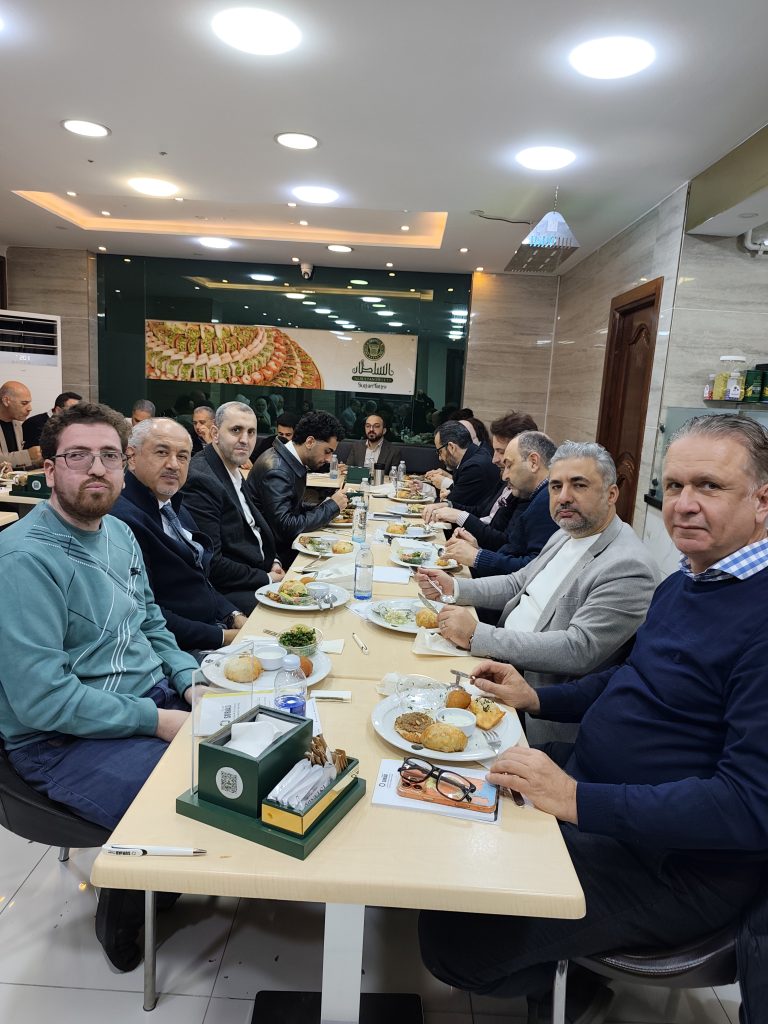
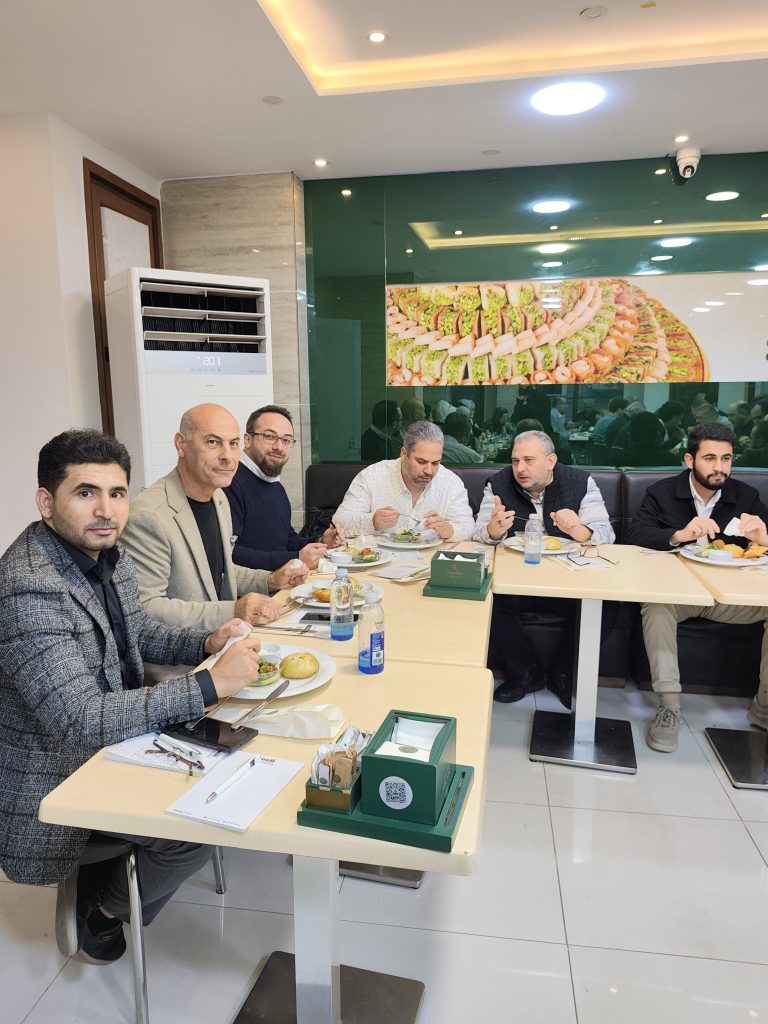
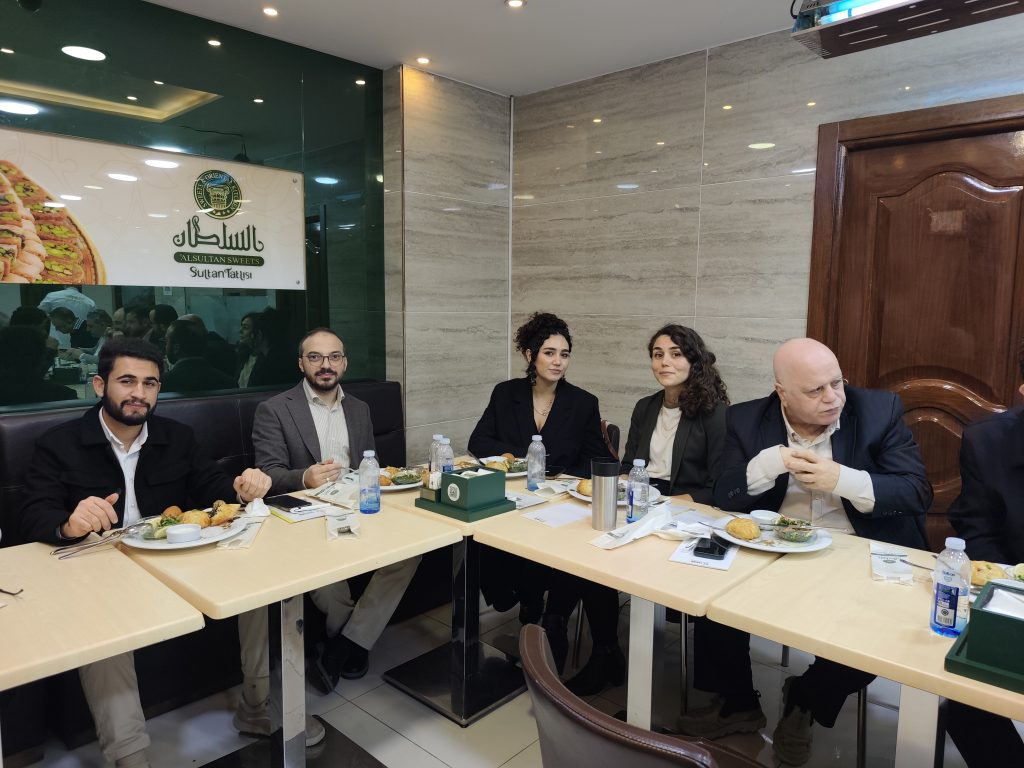
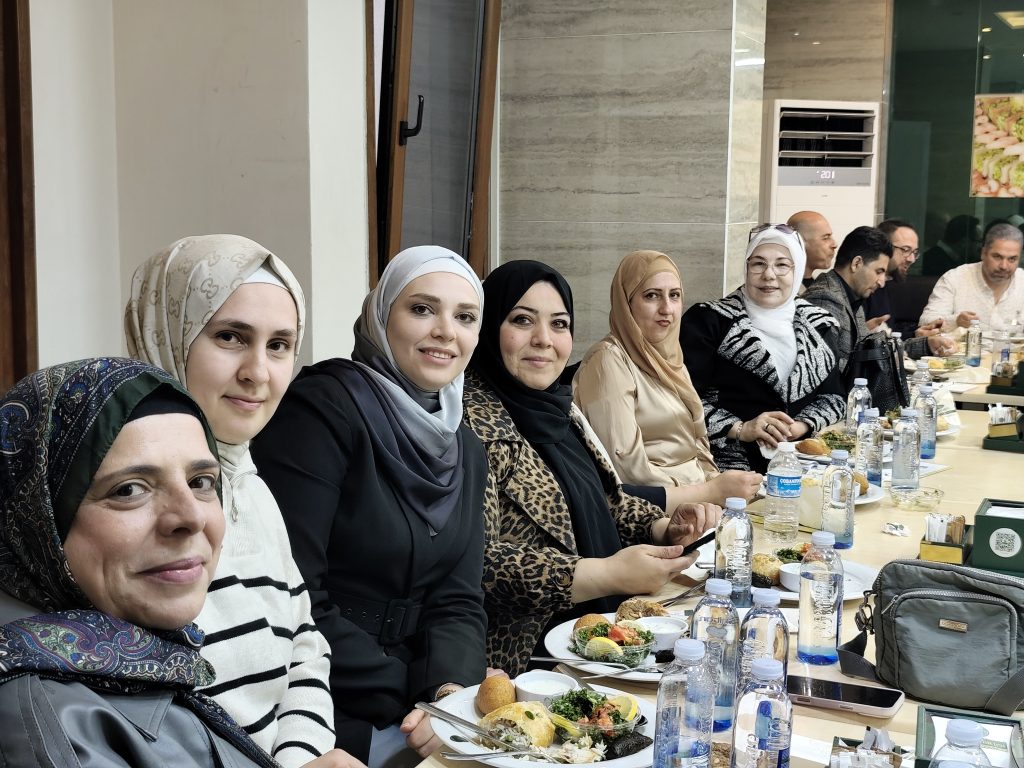
The session concluded with a networking lunch and an invitation for participants to remain connected and continue exchanging information and experience through the SURIAD community, helping transform the event from a one-time gathering into a sustainable network for cooperation.
Through the “Syrian Business Dialogues” series, SURIAD continues to provide a platform that brings together business owners and experts to discuss economic challenges realistically, exchange practical experiences, and strengthen cooperation among the Syrian business community in Türkiye, Syria, and the wider region.
Comments